The best-known plagiarism cases include Martial versus Fidentinus in 80 AD, Shakespeare’s borrowing from George North, Martin Luther King Jr.’s doctoral thesis, George Harrison’s “My Sweet Lord”, Joe Biden’s 1987 campaign speech, and Cristiane Serruya’s 2019 romance-novel scandal. Plagiarism means presenting another person’s words, ideas or work as your own without credit.
Quick summary
- The first recorded complaint about plagiarism dates to around 80 AD, when the Roman poet Martial called a rival a plagiarus, a kidnapper.
- Famous accused plagiarists span art, literature, science, music, politics and publishing: Leonardo da Vinci, Shakespeare, Samuel Johnson, Rudyard Kipling, Helen Keller, Martin Luther King Jr. George Harrison, Joe Biden, Dan Brown and Jane Goodall.
- Some cases were deliberate. Others were blamed on sloppy notes, faulty memory or a ghost writer.
- Courts can rule copying unlawful even when it was unintentional, the Harrison verdict used the phrase “subconsciously accomplished”.
- Running your draft through a plagiarism or uniqueness checker before publishing is the simplest defence.
What does plagiarism mean?
Plagiarism means taking another person’s words, ideas, structure or research and presenting them as your own without credit. It applies to books, songs, speeches, academic papers, blog posts and website copy.
The English word arrives via the Latin plagiarus, meaning kidnapper or plunderer, used as an insult by the Roman poet Martial. English writer Samuel Johnson included “plagiary” in his 1755 A Dictionary of the English Language, defining it as “a thief in literature; one who steals the thoughts or writings of another.”
Plagiarism is not the same thing as copyright infringement. Plagiarism is an ethical failure: no attribution. Copyright infringement is a legal finding about using protected work without permission. A single act can be both, as George Harrison discovered in 1976.
What was the first recorded case of plagiarism?
The first recorded instance of plagiarism goes back to the year 80 AD. Martial, a Roman poet, learned that a fellow poet, Fidentinus, was reciting Martial’s poems as his own. Reciting another poet’s work was normal; claiming it was not.
With no copyright law to fall back on, Martial did the only thing available to him. He wrote a series of poems about Fidentinus, publicly branding his rival a plagiarus, kidnapper, seducer and plunderer. The insult stuck, and gave English the word we still use.
Which are the most famous plagiarism cases in history?
Fourteen more cases follow the Fidentinus dispute, in date order. Together they cover almost every form plagiarism takes: copied drawings, recycled research, borrowed melodies, lifted speeches and ghost-written novels stitched from other people’s books.
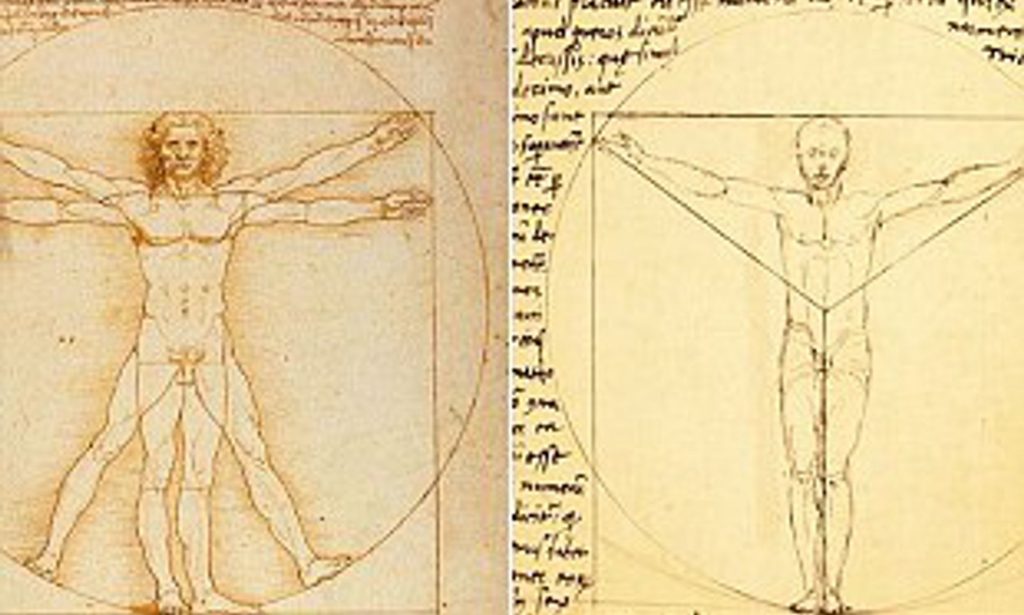
02. Leonardo da Vinci's "Vitruvian Man" may copy a friend's drawing
Leonardo Da Vinci‘s famous “Vitruvian Man” dates back to 1490. Research carried out by Claudio Sgarbi, an Italian historian, has raised questions about its originality. The research suggests “Vitruvian Man” is a copy of a drawing by a friend of Da Vinci’s, architect Giacomo Andrea de Ferrera.
03. Shakespeare drew on an unpublished 1576 manuscript
William Shakespeare was not spared either. LaFayette College professor June Schlueter and independent scholar Dennis McCarthy used anti-plagiarism software to find similarities between passages in Macbeth, King Lear, Henry VI and Richard III and the work of an unheralded scribe, George North, in his 1576 unpublished manuscript “A Brief Discourse of Rebellion”.
04. Samuel Johnson defined "plagiary" while borrowing definitions
Johnson’s 1755 dictionary gave English one of its clearest definitions of literary theft. The irony: his dictionary borrowed numerous definitions from earlier dictionaries.
05. James Platt Jr. was censured for using scholars' research
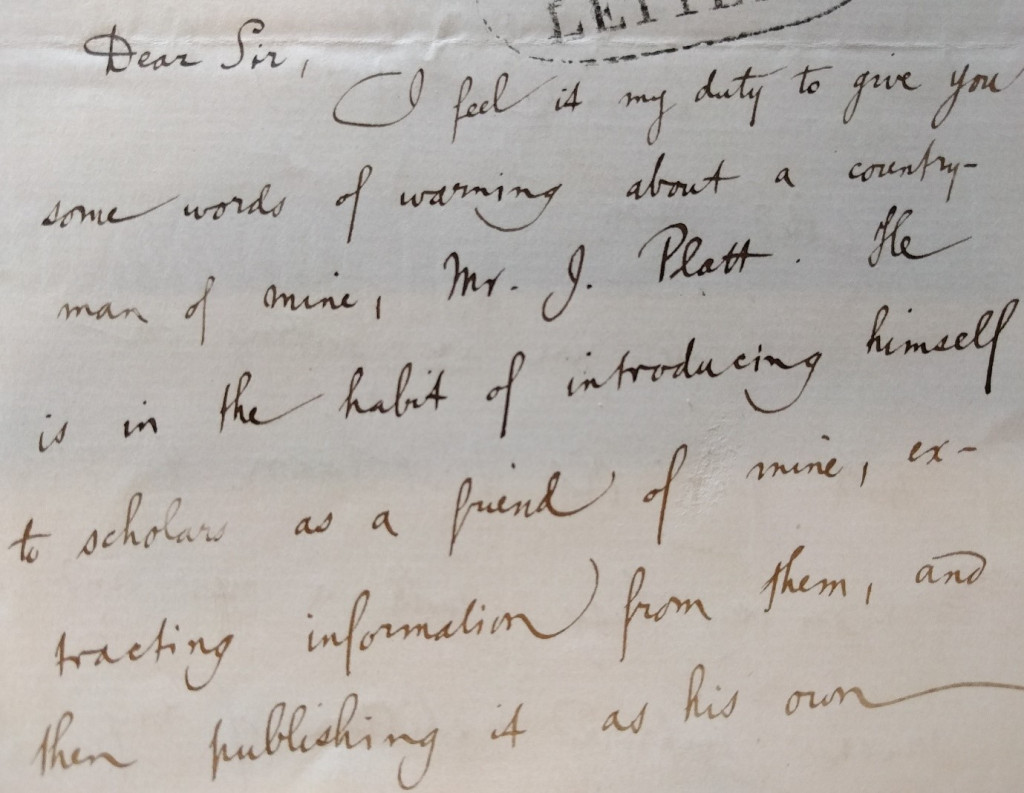
James Platt Jr., an English philologist in Anglo-Saxon studies, fell foul to plagiarism in the early 1880s. Scholars Pieter Jacob Cosijn and Eduard Sievers accused him of using their historical linguistic information without accreditation. In 1883, the well-known philologist Henry Sweet wrote to Cosijn to warn him.
Sweet wrote: “Dear Sir, I feel it is my duty to give you some words of warning about a countryman of mine, Mr. J. Platt. He is in the habit of introducing himself to scholars as a friend of mine, extracting information from them, and then publishing it as his own without a word of acknowledgment.” Platt received “a severe vote of censure” from the Philological Society.
06. Rudyard Kipling admitted borrowing for "The Jungle Book"
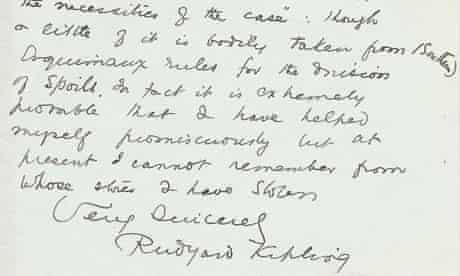
Rudyard Kipling, the Indian-born author of many short stories and novels, admitted to plagiarising portions of 1894’s “The Jungle Book”. In a one-page signed letter from around 1895 he wrote: “In fact, it is extremely possible that I have helped myself promiscuously but at present cannot remember from whose stories I have stolen.”
07. Helen Keller was accused over "The Frost King"
American author and disability rights advocate Helen Keller wrote a story called “The Frost King” in the early 1900s, while still a preteen, and sent it to a Mr. Anagnos at the Perkins Institution. Readers noticed it bore a distinct similarity to “The Frost Fairies” by Margaret T. Canby. Keller was accused of plagiarism and denied it. She had possibly written her story after her minder, Miss Sullivan, narrated a tale based on the original.
08. G.D. Birkhoff published ahead of von Neumann without credit
In the early 1930s, a young mathematician named John von Neumann proved the “mean ergodic theorem” and sent the proof to the Proceedings of the National Academy of Sciences. Senior mathematician G. D. Birkhoff reviewed it and recommended publication, which followed in 1932. Before that, Birkhoff improved on von Neumann’s result and called it the “pointwise ergodic theorem”. Birkhoff’s theorem was published a year earlier, with no mention made of the original. Only years later did Birkhoff admit von Neumann had priority.
09. Martin Luther King Jr.'s thesis and speech reused others' words
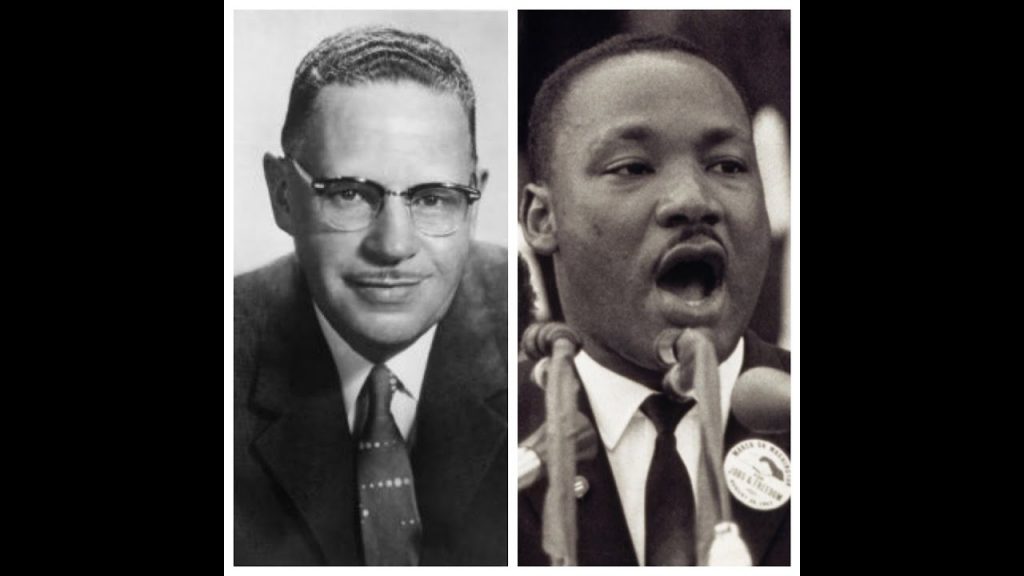
Dr. Martin Luther King, Jr. attended and graduated from Boston University in the 1950s. Years after his graduation and later assassination, claims surfaced that he had plagiarised parts of his doctoral thesis. Identified passages came from the dissertation of a previous student, Jack Boozer, and from the works of Paul Tillich, the thesis subject. Large portions of his 1963 “I have a dream” speech also bore more than a vague resemblance to a 1952 address by Archibald Carey, Jr. at the Republican National Convention.
10. A court ruled George Harrison plagiarised "subconsciously"
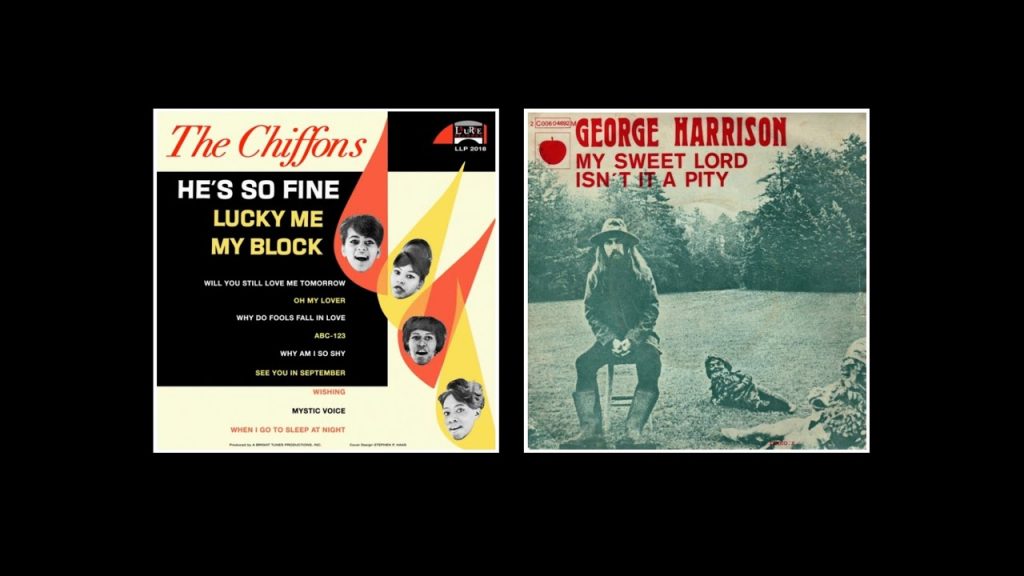
In 1976, the US District Court in Manhattan ruled that ex-Beatle George Harrison had committed plagiarism. His “My Sweet Lord” shared its tune and melody with the 1962 Ronnie Mack song “He’s So Fine”, made famous by the girl group The Chiffons. Judge Richard Owen called “My Sweet Lord” “the very same song as ‘He’s So Fine'”, adding: “This is, under the law, infringement of copyright and is no less so even though subconsciously accomplished.”
11. Plagiarism derailed Joe Biden's 1987 presidential campaign
Joe Biden, who later served as the 46th President of the United States, first ran for the office in 1987. Claims that he had plagiarised parts of a speech by British Labour Party leader Neil Kinnock derailed that campaign. Biden was also forced to acknowledge that he had plagiarised in a first-year law school paper in 1965.
12. Janet Dailey admitted copying Nora Roberts
Prolific American novelist Nora Roberts was the victim of “mind rape” in 1997. A vigilant reader noticed parallels between her 1988 book “Sweet Revenge” and another novel. Roberts identified it in a blog post as “Notorious” by Janet Dailey. Dailey admitted plagiarism, confessing to using story elements and details from Roberts in three of her books.
13. Dan Brown faced repeated "Da Vinci Code" claims
Dan Brown‘s “The Da Vinci Code” had already withstood two legal battles when suspected plagiarism examples surfaced in 2006. Brown was accused of using an exact passage from robotics scholar Mark Rosheim‘s paper “Leonardo’s Lost Robot”. Courts quashed a separate accusation brought by US writer Lewis Perdue the same year. In 2017, fellow author Jack Dunn argued the bestseller shared plot and scene similarities with his 1997 book “The Vatican Boys”.
14. Jane Goodall's "Seeds of Hope" contained unattributed passages
In March 2013, The Washington Post found copied content in leading primatologist Jane Goodall‘s book “Seeds of Hope: Wisdom and Wonder From the World of Plants”, including material from Wikipedia and other websites. Neither Goodall nor co-author Gail Hudson provided accreditation. Goodall blamed her “chaotic method of note taking” and promised to correct the references in a second edition.
15. Cristiane Serruya plagiarised across a 30-novel career
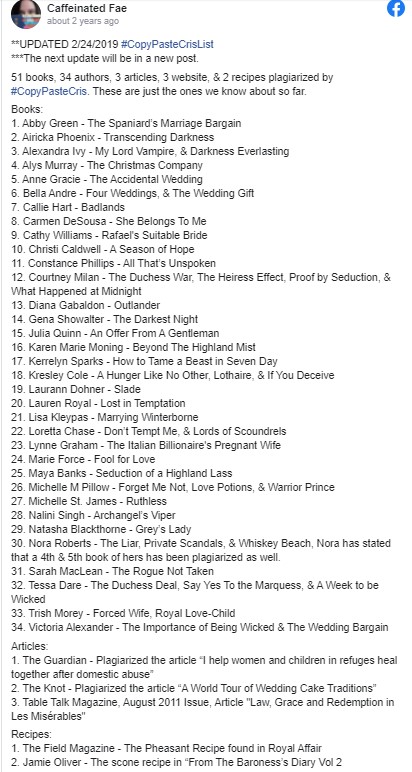
One of the worst cases of plagiarism is also the most recent here. In 2019, author Courtney Milan exposed Brazilian novelist Cristiane Serruya after recognising her own writing in a Serruya novel and posting about it on her blog. Other authors then found their work too. Across a seven-year, 30-novel career, Serruya had claimed the work of multiple other authors as her own. She eventually blamed a ghost writer, which only fuelled the social media storm. No new book from her has been confirmed since.
What do these cases have in common?
Three patterns repeat across all fifteen.
- Intent varies, consequences do not. Serruya and Platt copied deliberately. Keller, Harrison and Goodall pleaded faulty memory or bad note-keeping. All of them took reputational damage.
- Detection often comes late, and from readers. Nora Roberts learned about Dailey from a reader. Milan spotted her own sentences. Software found the Shakespeare parallels in 2018, more than four centuries after the fact.
- Attribution is the whole fix. In most of these cases, using the source was fine. Not naming it was the offence.
Plagiarism looks more common online because copying is easier, and because it is far easier to detect than it was in 1883.
How do you avoid plagiarising your own work?
Run your draft through a plagiarism or uniqueness checker before you publish, and keep a source list while you research. Sloppy notes caused at least two of the cases above.
You can use the checker at ContentBot. Paste your article into the block, click “check copy”, and it highlights sentences and stanzas that already appear elsewhere on the web, including pages you never opened. It also shows where the matching content sits, so you can add a citation or rewrite the passage.
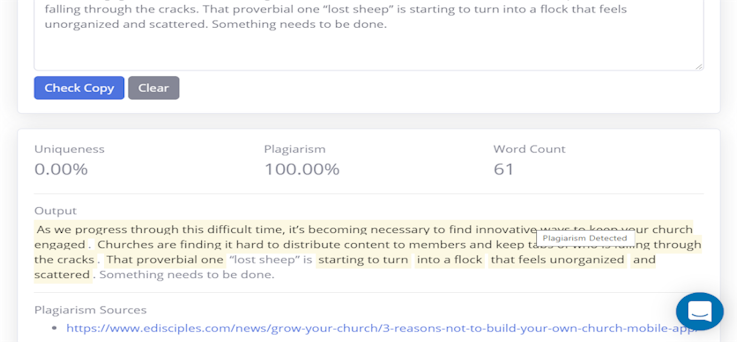
Check your copy or content before it goes live. Innocent motives have not protected anyone on this list.

- Technology and the future of books – July 29, 2021
- The benefits and importance of UX writing – July 29, 2021
- Use the science of music as a tool to enhance creative productivity – July 28, 2021
Frequently asked questions
What is the most famous plagiarism case?
George Harrison's is the most widely cited, because a court decided it. In 1976 a US District Court in Manhattan ruled that "My Sweet Lord" infringed the 1962 song "He's So Fine", written by Ronnie Mack, even though the copying was "subconsciously accomplished". The Martin Luther King Jr. thesis claims and the 2019 Cristiane Serruya scandal are the other most-discussed cases.
What is the meaning of plagiarism in simple terms?
Using someone else's words, ideas, research or structure and presenting them as your own, without credit. The word comes from the Latin plagiarus, meaning kidnapper, first thrown as an insult by the Roman poet Martial around 80 AD. Samuel Johnson's 1755 dictionary defined a plagiary as "a thief in literature; one who steals the thoughts or writings of another."
What was the first recorded case of plagiarism?
Around 80 AD. The Roman poet Martial found that a rival poet, Fidentinus, was reciting Martial's poems as his own work. With no copyright law available, Martial wrote poems attacking Fidentinus and called him a plagiarus u2014 kidnapper and plunderer. That insult is the origin of the modern word.
Can plagiarism be accidental?
Yes, and it still carries consequences. Rudyard Kipling admitted he could not remember whose stories he had "helped himself" to. Jane Goodall blamed a "chaotic method of note taking" for unattributed passages in Seeds of Hope. Judge Richard Owen ruled that Harrison's copying was infringement "no less so even though subconsciously accomplished".
Is plagiarism the same as copyright infringement?
No. Plagiarism is an ethical breach: using someone's work without credit. Copyright infringement is a legal finding about using protected work without permission. Copying a public-domain text without credit is plagiarism but not infringement. Harrison's case was both.
- Technology and the future of books - July 29, 2021
- The benefits and importance of UX writing - July 29, 2021
- Use the science of music as a tool to enhance creative productivity - July 28, 2021
2 thoughts on “15 Famous Plagiarism Cases in History (and What Plagiarism Actually Means)”