You will find, while browsing, that there are multiple blog posts focusing on trends in the copywriting and content marketing industry. The question is how many of those mentioned are current trends and how many are actually now established norms that are commonplace year-in and year-out? We’ve tried to target those sectors that are growing as tools and marketing concepts within the industry with these 10 top copywriting and content marketing trends in 2021.
01. Video Marketing
Incorporating your skills to include video marketing is the way to go in 2021. Video is no longer a niche market, with more and more businesses and industries having introduced video onto their landing pages to attract audiences that are becoming more visually motivated every day.
Video has quickly become the primary form of content consumed on the internet, and is frequently used to engage and educate audiences on a global scale. Using video to promote products with demos, Q&A sessions and more is becoming the go-to choice of many businesses, from start-ups to multinationals. So brush up on your video script-writing and planning skills as this growing trend is here to stay.
“Globally, IP video traffic will grow 3-fold from 2016 to 2021, a compound annual growth rate of 26%. Globally, IP video traffic will reach 227.6 Exabytes per month in 2021, up from 70.3 Exabytes per month in 2016. Globally, IP video will be 82% of all IP traffic in 2021, up from 73% in 2016.” – Cisco
02. Brand Value and Awareness
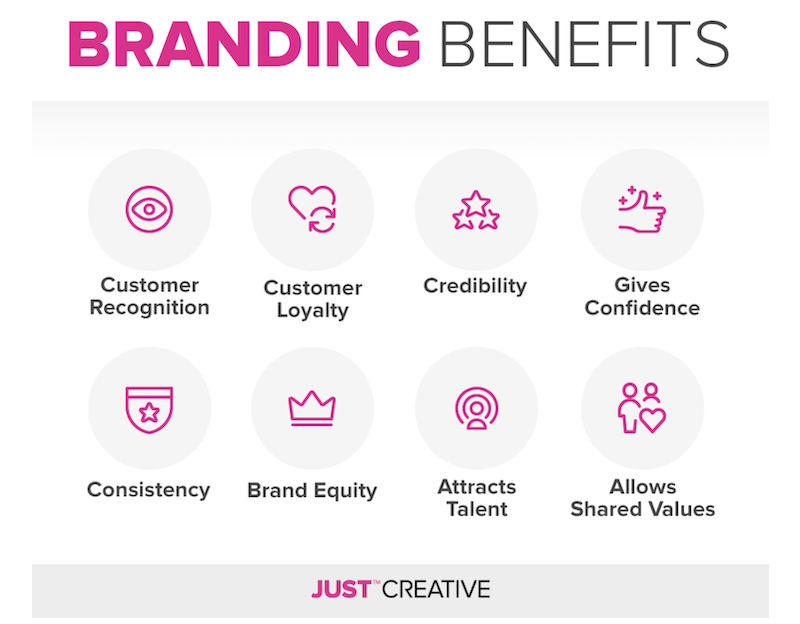
Building the value and awareness of the brand you represent is imperative for 2021, or you may become lost in the sea of mediocrity instead of making waves yourself. Competing for a primary place in your industry has become increasingly cutthroat with every passing year, especially in the wake of last year’s pandemic lockdowns. Coasting along is no longer going to suffice – targeting ways of building your brand’s value, conscience and presence will keep you ahead and ensure your survival. Anything less probably won’t.
Incorporating positivity, humour, warmth, hope and care into your copy and aligning these emotional triggers with your brand will help to humanise it. Being aware of social norms and targeting these to stand out from the crowd in a productive manner will highlight your brand value and make your audiences more aware of your presence. Be sure that your brand has the ability to back up everything you’re saying though. Authenticity and trust are even more important than positive branding.
03. AI Content Generation
The use of Artificial Intelligence in business in general is a rapidly growing trend with, according to Semrush, 86% of CEOs saying that AI is mainstream technology in the offices in 2021. Although generating content and copy using AI is not quite as popular percentage-wise yet, with OpenAI’s development of GPT-3, an autoregressive language model that uses deep learning to produce human-like text, content generation is taking on a whole new meaning. It has prompted a growing trend towards the use of AI content generators, like ContentBot, in copywriting circles.
Reasons for the increased use of AI for content generation purposes are numerous. It saves time and thus increases productivity, and also enables a user to generate both long form content and short form copy, ready for easy editing, for use on blogs, social media, websites and emails. The numerous features included in AI content generators alleviate many of the pressures that a copywriter or content marketer endures regularly, most notably writer’s block. The once-popular belief that AI was going to replace human endeavour has been replaced with the knowledge that it is actually an invaluable solution to assist with minimising difficulties.
04. Voice Search
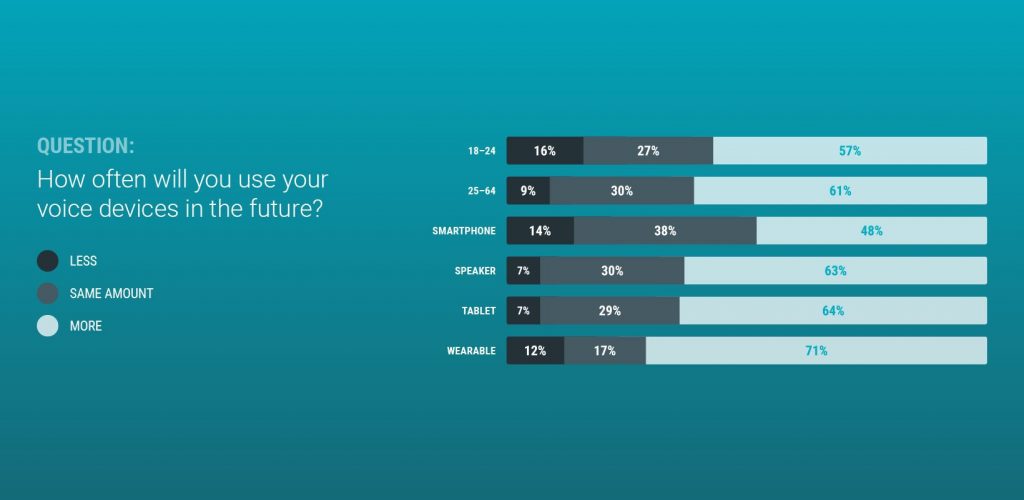
Already, due to search tools like Amazon’s “Alexa” and Apple’s “Siri”, more than 30% of web searches are searched using voice. Google Voice Search is able to be used on both desktop and mobile devices, and this manner of searching is growing fast. As such, the growing trend in SEO copywriting is to make sure that your keywords are aligned with voice searches. Where you might previously have optimised for “best time to go fishing”, you may now be better suited optimising for “when is the best time to go fishing?” Experts believe that utilizing voice search phrases in copywriting will allow for better streamlining of your SEO strategy by making keyword research easier.
05. Podcasts
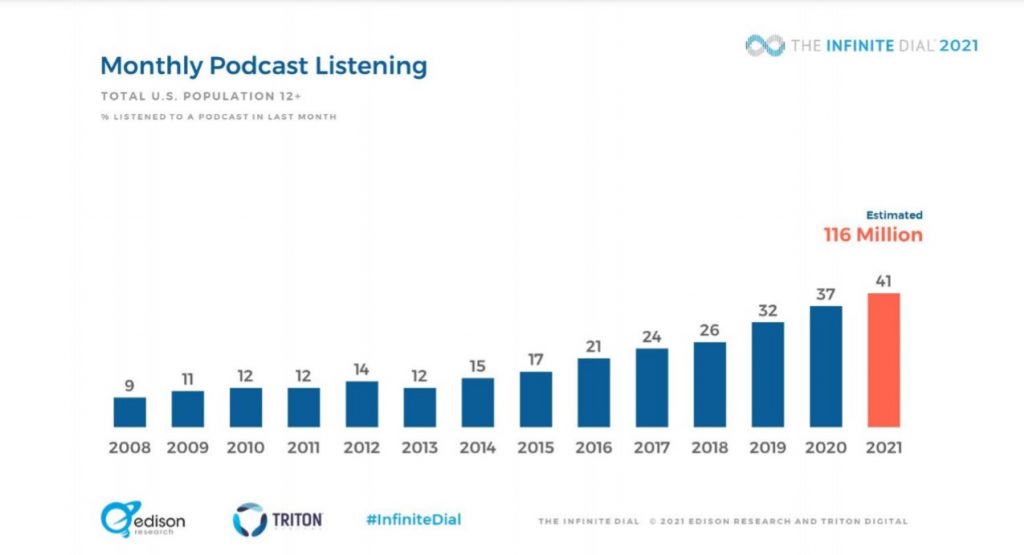
In late 2020 it was estimated that active podcasts had topped 1.5 million compared to a little over 500 000 in 2018. At present there are over 47 million podcast episodes available in Apple Podcasts online. And people are listening to them more often too! According to The Infinite Dial 2021 Digital Media Survey conducted by edisonresearch.com, 41% of the US population over the age of twelve listen to at least one podcast a month, up from 37% in 2020. These growing trends are expected to continue as multi-tasking becomes even more the norm and gridlock increases again as lockdowns diminish. What does this mean for the copywriting industry?
As audio and visual web content grows, so you need to refine your skills. At one stage it was all about writing as your primary connection to your audience whereas writing is slowly taking a backseat nowadays. Not in a hurry though – every video needs a script and podcasts are no different. Podcasters the world over rely on the creativity and persuasive content writing skills of the copywriter and content marketer to ensure that their respective voices are literally and figuratively being heard. So sharpen your quills and get with the program… and the next one! You won’t regret refining your portfolios to include podcast writing if you haven’t already.
06. User Generated Content (UGC)
An increasing number of businesses are making use of User Generated Content as we enter the third decade of the new millennium. Whether it is simply by highlighting customer testimonials and reviews, by conducting interviews, polls and surveys, or by using incentives to ask for relevant user images, videos or other inputs, the trend is to make more use of USG because it improves conversions.
As a copywriter, you’d be well advised to investigate how UGC can improve your copy and content marketing. Audiences worldwide are becoming more trusting of the opinions of other consumers, often basing their buying decisions on these. The world is a more real place nowadays, and gimmicks and sales pitches don’t hold the same conversion values they once did and, as such, it’s time to get real and give your audience what they want – more feedback from their peers.

07. Long-Form Content
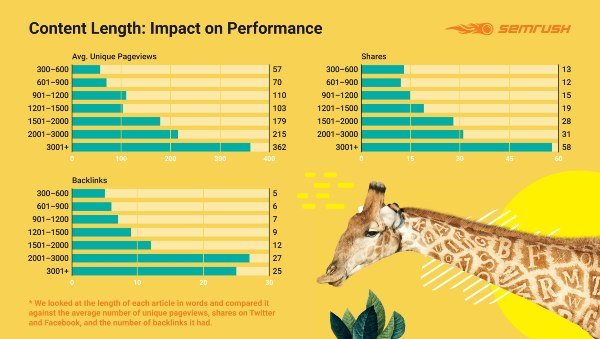
Long-form content is the way to go in 2021. In a world dominated by social media, you’d expect the opposite but statistics are showing that, whether it’s audio, visual or written copy, longer is more popular with consumers. People want good content. They want value and to be able to see the purpose and identity of a brand. The more authentic and valuable content you can give to your audience, the more persuasive you will be in getting people to buy your product. By employing decent amounts of research, planning, honesty, creativity and inspiration your efforts will be rewarded.
Remember that writing long-form content has other benefits too. You are able to acquire more links and backlinks, with, according to Backlinko, long-form articles getting an average of 77.2% more links than short articles. As you know, links are the imperative to good rankings and driving web traffic, so be trendy and engage your audience more long-form content.
08. Content Communities
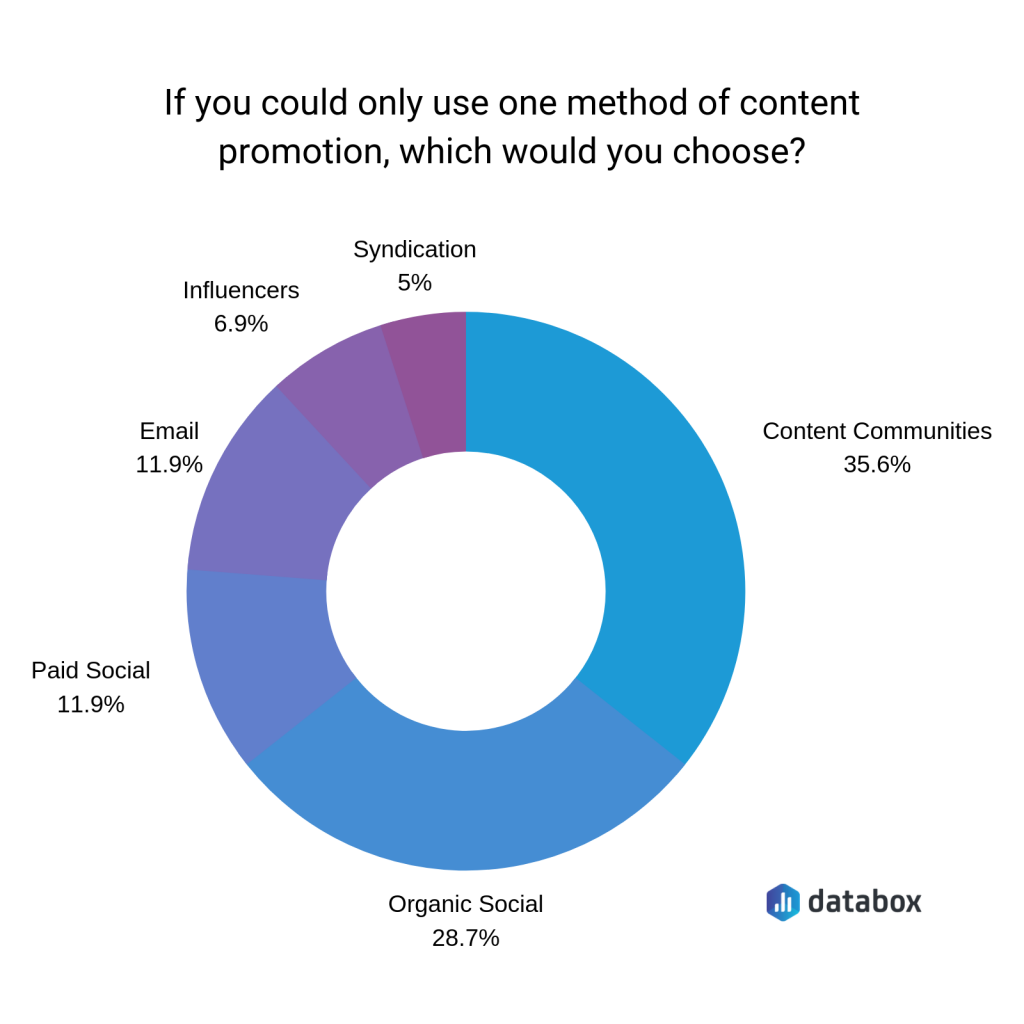
Although content communities have been around for many years now, the current trend in business is to utilise these on a more targeted basis than ever before. A transparent community that encourages dialogue between a business and its audience is beneficial for all concerned. The business benefits from inexpensive feedback from users, allowing it to tweak the functionality of a product and rely on further responses to see results. Obviously positive reviews and comments can serve the marketing team with invaluable sources of promotional material. In return, the audience has the opportunity to speak to developers and marketers in open forum, allowing specialised responses to any questions or problems they may experience.
Content communities are invaluable to copywriters and content marketers as provide a direct line for user research, and the opportunity to gauge the demographics, locations and reactions of their audiences. So go social and learn more about the most important people to you professionally – your potential customers.
09. Updated Content
“By updating old content, you can get Google to crawl your site more frequently without needing to publish more often. The more Google crawls your site, the more likely your most recent information will show up in search results after publishing, which gives you an advantage in your search engine results rankings.” – Neil Patel
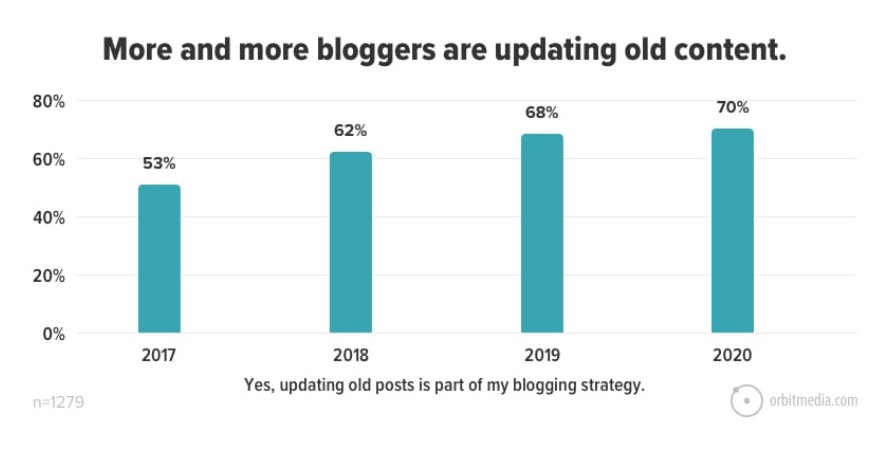
How often do you update your older content. In 2017, 53% of bloggers updated their content with this percentage climbing every year, with 70% of bloggers making changes as part of their content strategy by 2020. The trend is leaning heavily towards regular updating of posts in order to improve visibility on search engines and thus allowing your older content to keep working for you. Add, edit and update where and when you can. We’ll let Andy Crestodina add further ammunition:
“Bloggers who go back and update old content are more than twice as likely to report “strong results.” They may have come to the same realization we did: you don’t need 1000 articles. You need 100 great articles.”
10. Limit Pop-ups
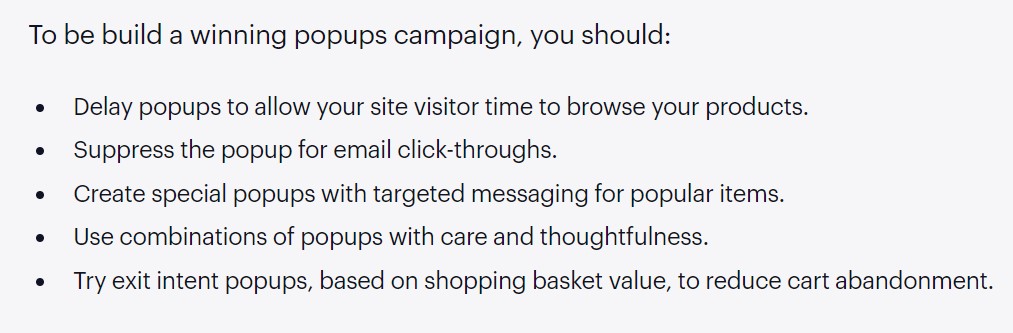
Welcome gates, pop-ups and slide-ins are effective when used correctly, and the figures support this. Certain websites have reported conversions of up to 2100% since adding them so it’s difficult to argue against their use. If they are used correctly. Unfortunately, in too many instances, they’re overused and this creates an immediate “fight or flight” response from many site visitors. “Fight” because closing incessant pop-ups is often enough to make your blood boil and “flight” because it’s often easier to flee the site in question than persevere. Either of these responses are detrimental to the promotion of a product or service. So, these days, effective use of pop-ups is important in order to gain a conversion advantage.
Current trends encourage more limited use of pop-up timing in order to still get the message displayed across without causing negative reactions from site visitors. Settings allow you to define when to “pop-up” a visitor, by amount scrolled or time spent on a page, among others. Programming a delayed timing on these will give your visitor a more pleasant site experience. If the copy on the displayed page is high quality, nobody will mind the odd pop-up but being accosted multiple times becomes annoying to even the most durable visitor. Also making sure that the copy included in the pop-up itself is valuable and necessary will help to alleviate irritation. So experiment, listen to feedback and follow the trends.
Summary
As initially mentioned, there are a number of other facets that could be regarded as “trending”, but have actually been standards in the industry for years. Research, for example, is one of these. The 10 top copywriting and content marketing trends in 2021 that we’ve just mentioned are facets that are showing remarkable growth over recent years and will probably have a greater impact on the way you, as a copywriter or content marketer, produce copy for years to come. Keep trendy.

- Technology and the future of books - July 29, 2021
- The benefits and importance of UX writing - July 29, 2021
- Use the science of music as a tool to enhance creative productivity - July 28, 2021
2 thoughts on “Keep Trendy: 10 Top Copywriting and Content Marketing Trends in 2021”